
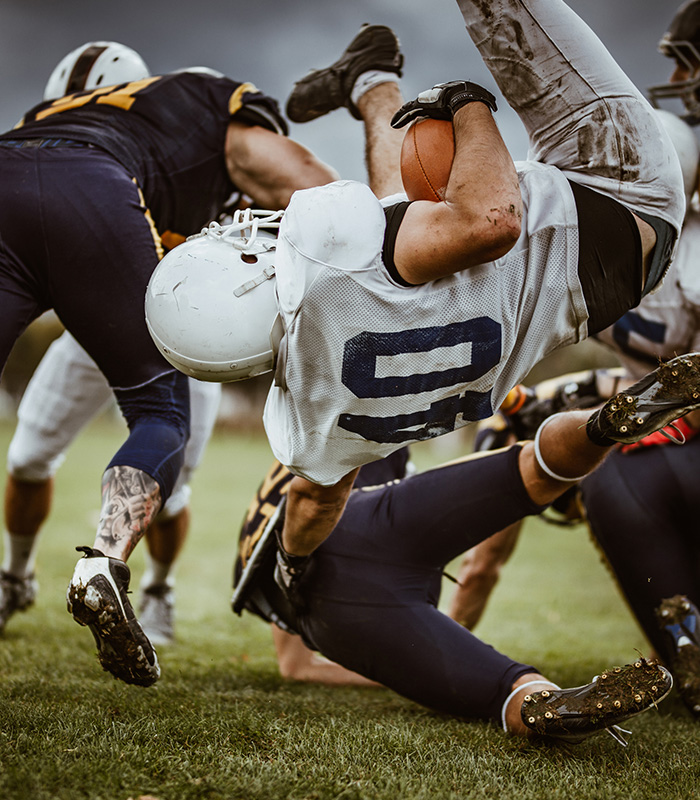
A concussion may be a serious injury to the brain, but it’s also commonplace among children as well as adults. Research suggests that up to 3.8 million concussions occur in the United States every year due to sports and other activities, 1 and this doesn't account for the number of concussions suffered in car accidents, falls and other incidents. Concussions are especially threatening to the health of young children participating in contact sports like football and soccer, where the nature of those games can lead to head traumas that include concussions.
But the prevalence of concussions is not an excuse to dismiss them as non-serious injuries. Children and adults should take all reasonable measures available to prevent these injuries from occurring in the first place. And given the importance of diagnosing and treating concussions when they occur, it's important to be educated on the symptoms of concussions, as well as when someone needs to go to the hospital for evaluation. Here's a quick primer on what you need to know about the dangers of concussions, how to seek treatment, and how to prevent them in the first place.
Concussions can be difficult to spot. The symptoms experienced aren't the same for every person, and sometimes they can take a day or longer to appear, causing victims of a concussion to be unaware they've suffered a brain injury. This is one reason why up to 50 percent of all concussions are never detected or treated, 2 increasing the long-term health risks of these head injuries.
Common symptoms of a concussion may include nausea, dizziness, headaches, fatigue, disorientation or confusion, difficulty sleeping, memory loss and/or mood changes. Some concussion symptoms develop immediately after the injury, but in other cases it could be several days before symptoms are apparent through a concussion screener. In general, if someone suffers a moment of unconsciousness or limpness after a strike to the head, this is a likely sign that a concussion has occurred.
If you believe a concussion may have been suffered, it's important to get the individual to a medical professional for evaluation. A physical trainer, medic, EMT or ER physician can all provide an evaluation and determine whether additional treatment or observation is needed.


Even during activities where concussions frequently occur, proper safety measures can dramatically reduce your risk of a concussion and/or the severity of a brain injury. One of the most effective prevention measures is to wear proper helmets when participating in high-risk activities, including football and cycling. Adults should always wear seat belts when driving in cars, while smaller children should be properly secured in a car seat at all times. 3
Participants in sports should also make sure they're performing actions properly, and in a way that minimizes their risk of a head injury.
"In football, this means not leading with your head when trying to make a tackle," says Dr. Heather Justice, Regional Medical Director for MultiCare Emergency. "Soccer players, on the other hand, should be careful not to try and hit the soccer ball with the top of their head, which is how many soccer concussions in young children occur. Taking these proper safety measures can significantly reduce your risk of a concussion."
As awareness of the potential dangers of concussions continues to grow, both children and adults need to be more vigilant about the risks and possible signs of a head injury. Better concussion safety and treatment early in life could help you avoid more serious health complications down the road.